Custom Printed Tissue Paper for Branded Wrapping
Custom printed tissue paper adds a branded wrapping layer to retail bags, mailers and gift sets. Plan the sheet size, folding sequence and artwork repeat around the product being wrapped. Opacity, touch, print appearance and contact with the product all need consideration. Decorative tissue should not be treated as a substitute for a protective packaging structure.
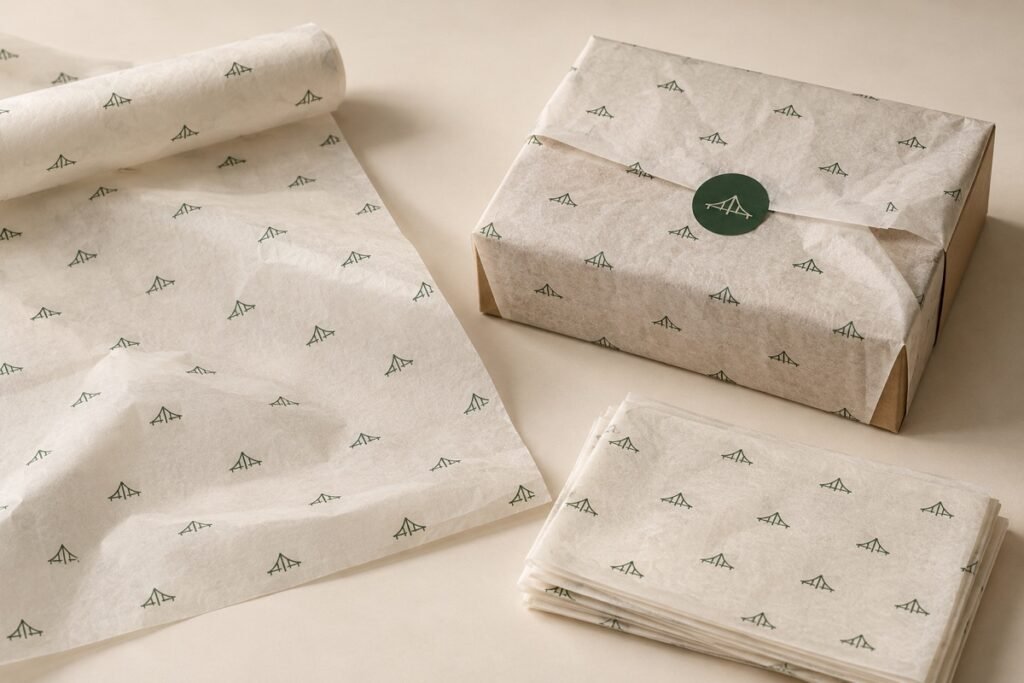
See the packaging in context
Explore presentation, component relationships and material direction. Confirm production specifications through project-specific samples.
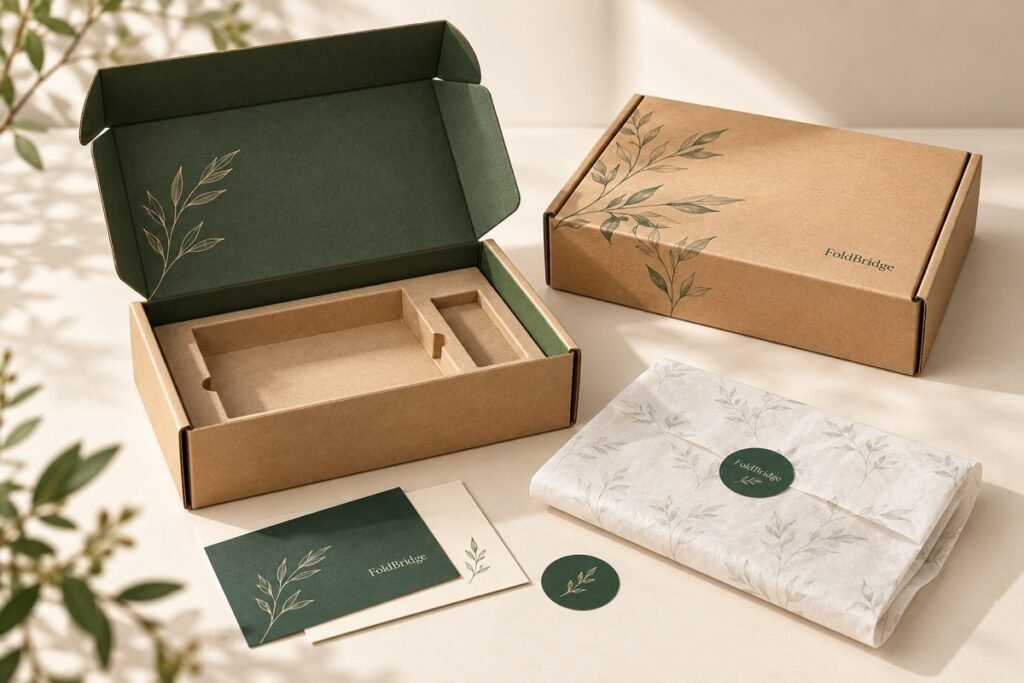
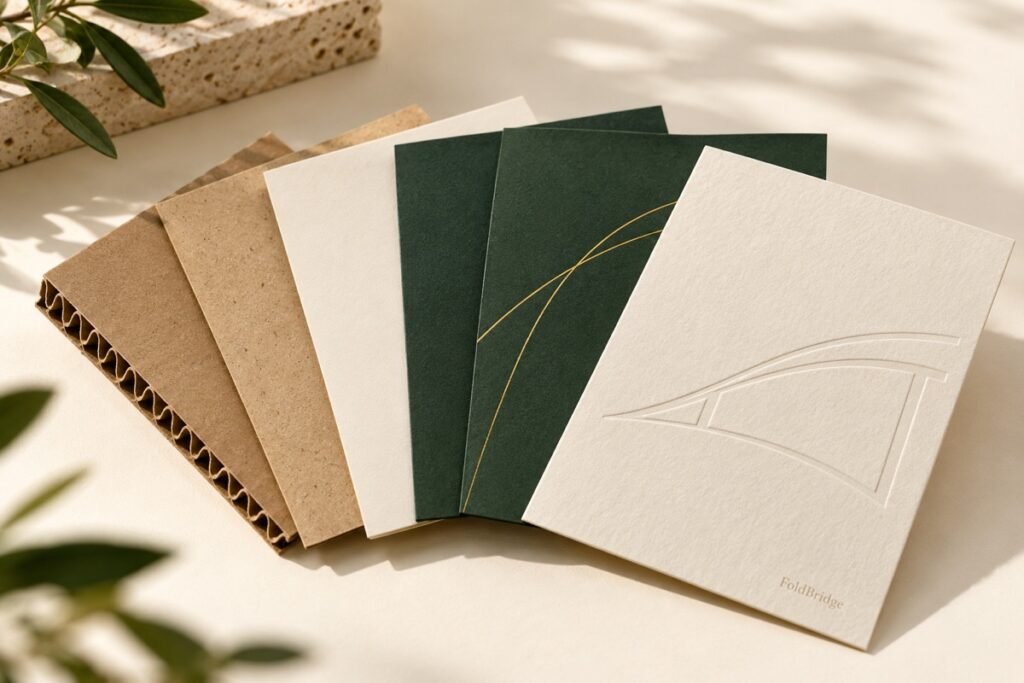
Choose the pattern and sheet around the wrapping method
Swipe across the table to compare all details.
| Option | When to consider it | What to check |
|---|---|---|
| Repeating logo | A repeated mark can remain visible after the sheet is folded. | Review scale, spacing and which parts appear on the closed wrap. |
| Directional artwork | A pattern may have a clear top and bottom. | Test the real folding sequence so the design faces the intended way. |
| Light printed coverage | An open layout can make the paper itself a visible part of the design. | Approve opacity and appearance on the selected stock. |
| Coordinated wrapping set | Tissue can work with a seal, card and outer bag or mailer. | Check contact, handling and all component quantities per packed order. |
Approve a wrapped sample, not only a flat sheet
Measure the product in its intended wrapped state and specify the preferred sheet size. Decide whether one sheet must cover several product sizes or whether separate formats would simplify packing. Describe the number of sheets used per order so component quantities are not confused with customer order quantities.
Check the print under normal viewing conditions and after folding. Review how the sheet handles, whether important marks disappear into folds and whether the wrapping method creates excessive bulk. Include the seal or sticker when assessing the complete opening sequence.
Where printed tissue touches a sensitive product surface, ask what evaluation is appropriate for marking or transfer. If the application involves direct contact with food or another regulated use, that requires separate material and application review. Do not assume a general branded wrapping stock is suitable.
What we will work through.
| Sheet size | Base the size on the product and folding method to avoid excessive waste. |
|---|---|
| Paper | Weight, opacity and feel should be checked with samples rather than judged from a screen. |
| Ink coverage, pattern scale and color references affect the result on thin material. | |
| Contact | Assess color transfer and suitability where tissue touches a sensitive product surface. |
| Packing | Agree on sheet counts and delivery packaging for storage and efficient fulfillment. |
Compare the complete quotation
Compare sheet size, stock specification, print method, number of artwork versions and quantity. Request packing and delivery details separately where needed. Claims such as acid-free, recycled or certified should be supported for the actual supplied material before they are used in your own product marketing.
Questions before you commit
How large should the printed logo repeat be?
Choose it using the wrapped product rather than the flat artwork alone. A trial fold shows whether the logo remains visible and whether its scale suits the product. Use that review to establish the repeat and orientation before print approval.
Can tissue paper protect a glass skincare product in transit?
Do not rely on decorative wrapping alone. Glass products may need a fitted support and an appropriate outer package. Evaluate the complete packed product for the intended distribution route, and define tissue's role separately from the parts providing restraint or protection.
How do I choose the sheet size for custom tissue paper?
Wrap the actual product or packaging set using the intended sequence, then measure the sheet required for overlap and folds. Consider whether one sheet size suits several orders. Confirm the folding and packing method rather than choosing a size from the product dimensions alone.
How should a repeating logo pattern be arranged on tissue?
Specify the logo scale, spacing, direction and the part of the wrap visible when opened. Review a layout proof and a folded mockup, since folds can hide or interrupt a repeat. Confirm print registration and appearance expectations with the proposed production route.
Should I test printed tissue against the product surface?
Yes, when printed tissue will contact the product or another visible surface. Describe handling, pressure and expected use conditions, and review a suitable sample. Any ink-transfer or surface-contact requirement should be stated and evaluated rather than inferred from the concept image.
Is custom tissue paper suitable for direct food contact?
Direct food-contact use is outside this website’s confirmed packaging scope. Do not assume a tissue specification is appropriate because it is paper. Identify the intended use and obtain relevant material and compliance evidence from the proposed supply route before considering that application.
Make the next decision with a clear brief
Share the product, quantity per SKU, destination and the questions still open. Specifications, costs and timing are confirmed after project review.