Custom Product Labels & Packaging Stickers
Custom product labels need to work on the surface where they will be applied, not only look right on a screen. Container shape, material, moisture exposure and application method guide the choice of face material, adhesive and finish. Coordinate label artwork with cartons and inserts so every SKU carries the correct information and visual reference.
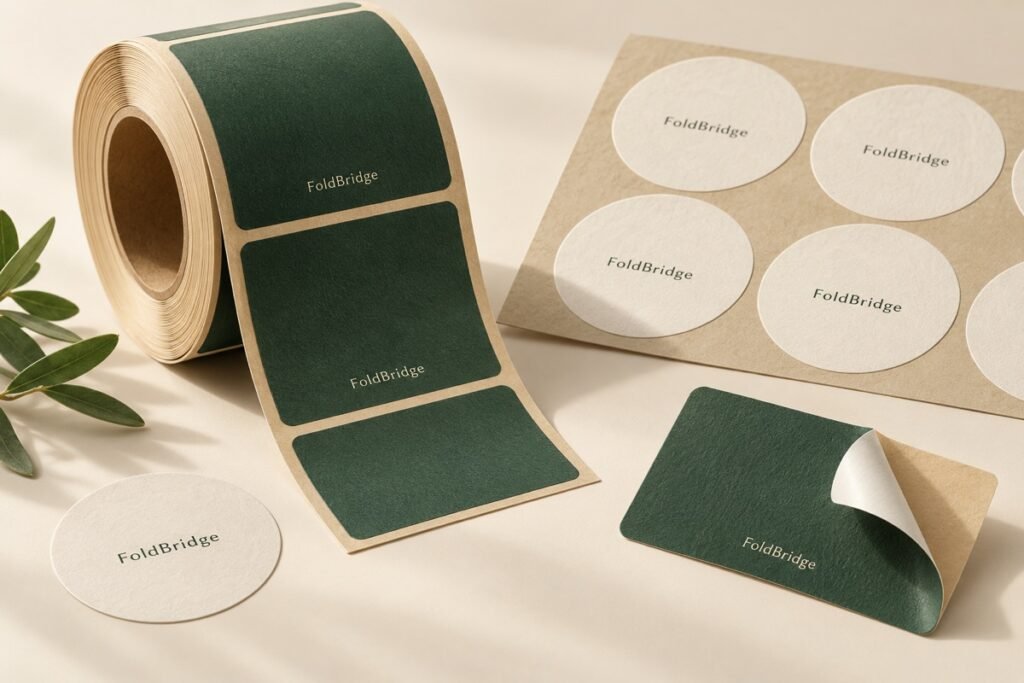
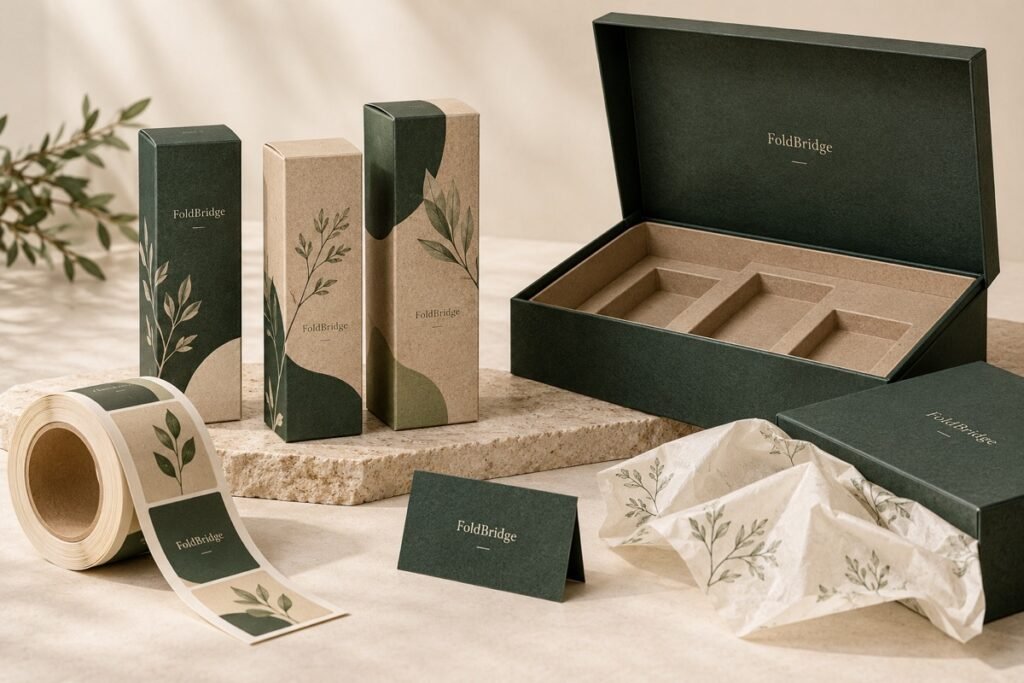
See the packaging in context
Explore presentation, component relationships and material direction. Confirm production specifications through project-specific samples.
Start with the application conditions
Swipe across the table to compare all details.
| Option | When to consider it | What to check |
|---|---|---|
| Dry retail packaging | Paper-based label options may be considered for an appropriate dry-use application. | Review the actual surface, finish and handling rather than choosing on appearance alone. |
| Bathroom or moisture exposure | Film-based constructions may be worth evaluating. | Check the complete label, adhesive and print system on the actual container under intended conditions. |
| Curved or squeezable container | Shape and movement influence how a label sits on the product. | Supply a representative container and review edge lift, wrinkles and print appearance. |
| Automated application | Roll presentation becomes part of the production specification. | Confirm unwind direction, core, roll limits, label spacing and equipment requirements. |
Keep material, adhesive and artwork decisions connected
Identify the container material, shape and surface finish. Describe whether labels are applied by hand or machine, and under what conditions. Tell us about likely contact with water, oils or other substances. Terms such as waterproof should follow application-specific evidence, not replace the specification.
For roll labels, obtain the applicator requirements before finalizing the format. For hand-applied labels, consider placement guides and the number of labels per product. A front-and-back set also needs clear identification so the correct artwork is used in the correct position.
Build an artwork list by SKU, size and market. Check product names, versions and barcode artwork against the buyer's approved files. Color approval on label material should be kept alongside the carton reference; a shared color name does not ensure an identical appearance on different surfaces.
What we will work through.
| Surface | Tell us whether the label goes on glass, plastic, coated board or another material, including curves and texture. |
|---|---|
| Environment | Identify moisture, oils, temperature changes, abrasion and other likely exposure. |
| Construction | Paper or film, finish, adhesive and release liner are selected for the specific application. |
| Application | Manual or machine application affects roll direction, core size, spacing and delivery format. |
| Artwork | Provide final copy and artwork dimensions. Regulatory wording remains subject to customer review. |
Compare the complete quotation
Request quotations for a defined shape, size, construction, format and quantity per design. Keep specialty finishes and sample evaluation visible in the scope. Branding stickers and product identification labels may have different functional needs; list them separately even if the artwork is similar.
Questions before you commit
Can the same label work on glass and plastic?
It should not be assumed. Surface material, shape, finish and use conditions can change the application requirements. Test the proposed construction on representative containers and record the result before extending one specification to another product.
Do you write the required cosmetic label text?
The brand must provide and approve the product information and market-specific text, with its qualified advisers where needed. The packaging brief can coordinate artwork versions and placement, but it does not replace the brand's regulatory review.
What container measurements are needed for a product label?
Provide the intended label area, container shape and surface, plus the proposed application position. Note seams, curves, tapers or texture. Check the proposed label on the actual container under the intended application conditions before confirming size and artwork.
How do I choose a label for moisture or oil exposure?
Describe the exposure and the container surface in the brief. Material, adhesive, ink and protective finish should be evaluated as a combination. Ask for a sample suitable for that use and agree the checks; terms such as waterproof should not substitute for defined conditions and evidence.
Can you prepare labels for manual and machine application?
State the application method before the quotation. Machine-applied labels may require defined roll direction, core, roll size, spacing and registration details from the applicator. For hand application, review handling and alignment. Confirm compatibility with the intended process on an appropriate sample.
How should several label artwork versions be organized?
List each SKU, artwork revision, label size and quantity separately. Keep required product wording under the brand’s approval and link the print file to the correct version. Use a version register so a shared format does not lead to artwork or quantity being assigned to the wrong product.
Make the next decision with a clear brief
Share the product, quantity per SKU, destination and the questions still open. Specifications, costs and timing are confirmed after project review.