Custom Folding Cartons for Retail Products
Custom folding cartons are printed paperboard boxes supplied flat for assembly around a product. For skincare and retail goods, start with the filled product, its weight and the packing method. Then compare the closure, board and finish. A retail carton and a shipping package solve different problems; plan both when the product travels by parcel.
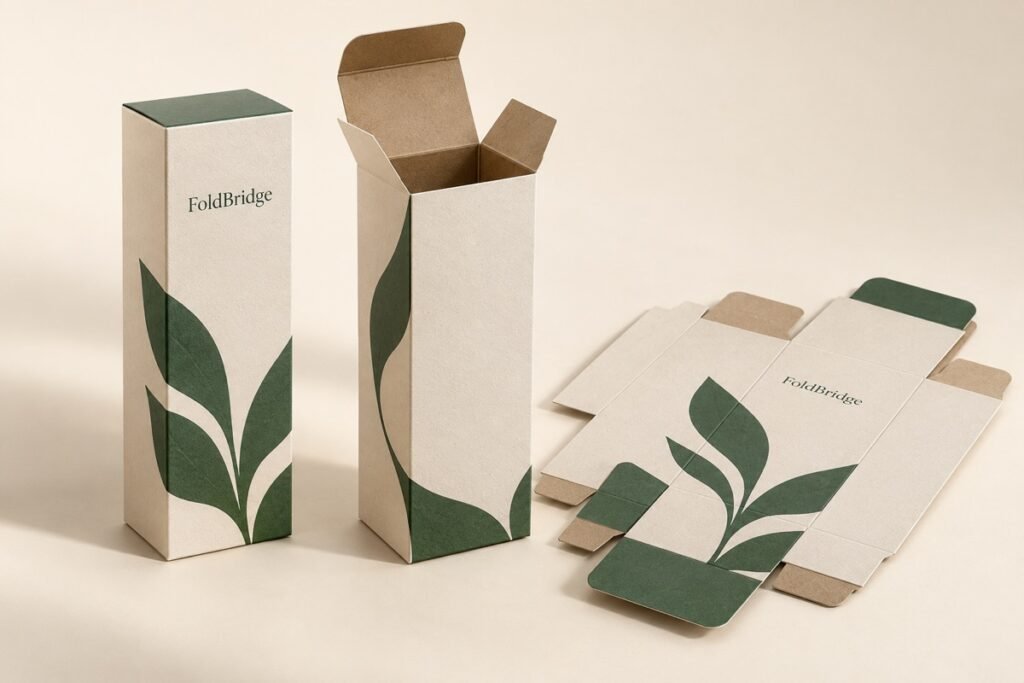
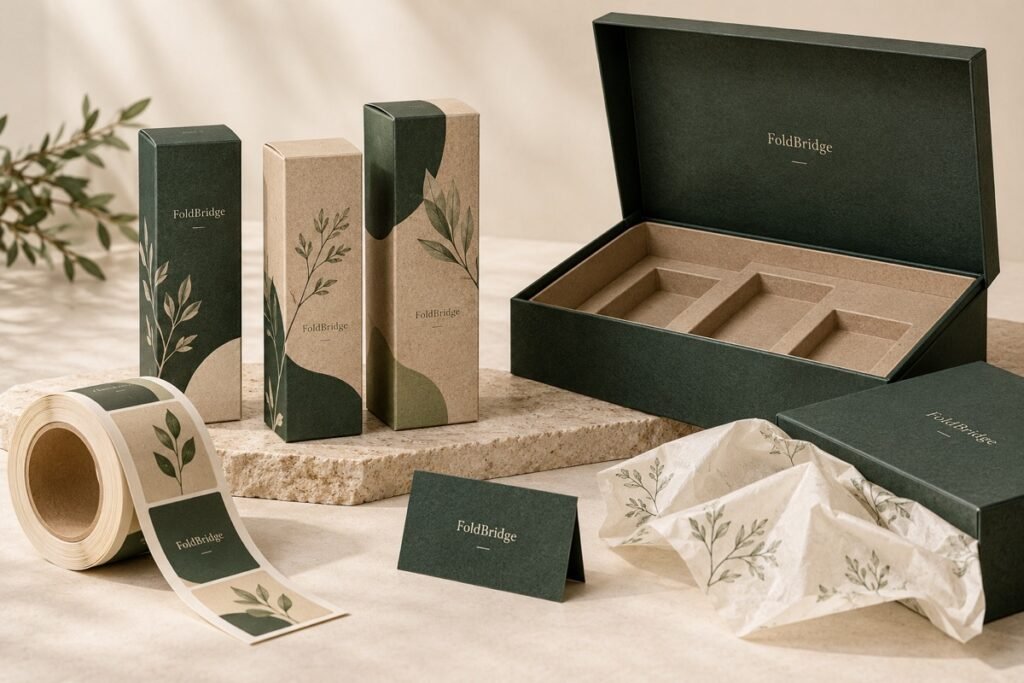
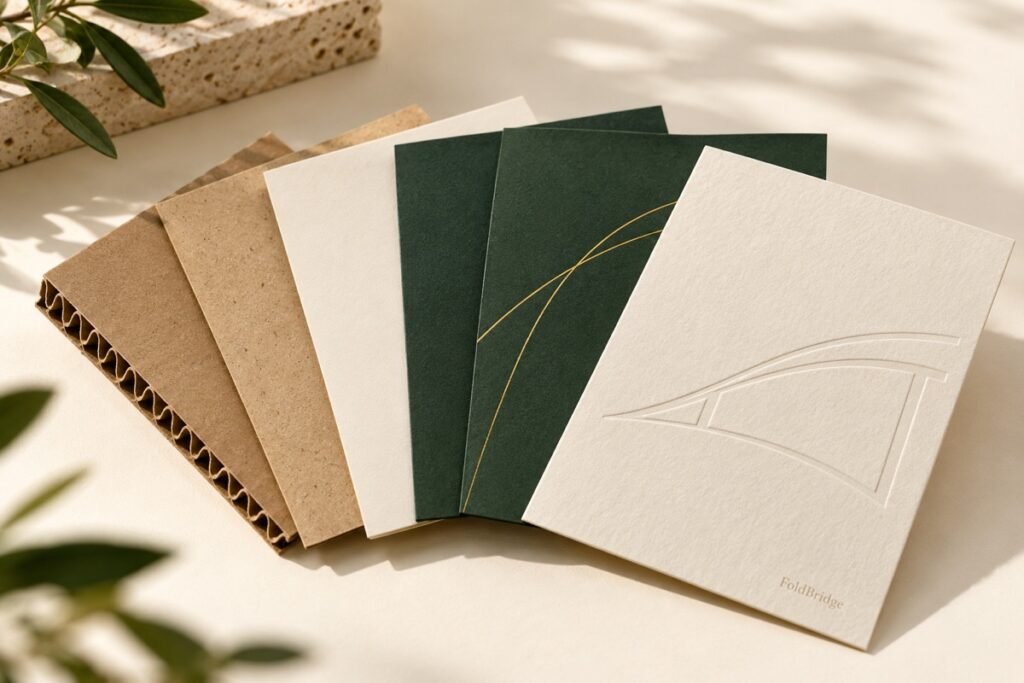
See the packaging in context
Explore presentation, component relationships and material direction. Confirm production specifications through project-specific samples.
Choose the carton around the packing process
Swipe across the table to compare all details.
| Option | When to consider it | What to check |
|---|---|---|
| Straight tuck | Both ends tuck toward the same face. Review the opening presentation and the position of visible artwork. | Check flap clearance and how the packer closes the filled box. |
| Reverse tuck | Opposing tuck directions provide another layout for a single-product carton. | Check the artwork orientation, opening face and closure with the actual product. |
| Locking base | An interlocking base is an option when the base construction needs more attention. | Confirm the assembly sequence and suitability for the filled product; the name is not a load rating. |
| Carton with insert | A separate or integrated support can locate a bottle, jar or accessory. | Approve the carton and insert together, including removal space and product contact points. |
Size the product first. Approve the carton second.
Record the maximum dimensions of the finished product, including caps, pumps, seals or protruding parts. Identify the unit of measurement and whether a supplied box dimension is internal or external. A number without that distinction can produce a box that looks right on a drawing but does not fit in use.
Use an unprinted structural sample to review insertion, closure and removal. Pack it using the same sequence intended for fulfillment. If an insert is involved, check the assembled set rather than approving the carton in isolation. Keep the agreed dieline revision with the sample record.
Printed folding cartons also need a clear artwork plan. Separate the print design from foil, embossing or other finishing instructions. Ask which sample represents the proposed board and print route before treating it as a production reference. A screen image can help approve layout; it cannot establish the physical feel of the finished carton.
What we will work through.
| Structure | Tuck-end, reverse tuck and locking-base styles can be explored against product weight and assembly needs. |
|---|---|
| Material | Coated or uncoated paperboard; grade, thickness and finish are selected after reviewing the product. |
| Print & finish | Compare process print, spot colors, foil and embossing. Availability and tolerances depend on the selected production route. |
| Fit information | Product length × width × height, units, weight, cap or pump projection, and any protective insert. |
| Quantity & sampling | Specify quantity per SKU. MOQ, tooling, sample fees and production time are quoted after specification review. |
Compare the complete quotation
Compare quotations using the same board specification, finished size, quantity per artwork version and finishing scope. Ask whether tooling, samples, packing and delivery are included. Simplifying a closure or finish may change the quotation, but evaluate assembly and product fit before choosing solely on unit price.
Questions before you commit
Can the same carton work for several skincare SKUs?
Possibly, when the products share suitable dimensions and packing needs. A shared structure can still require separate artwork versions, quantities or inserts. List each SKU before sampling so a common carton is an intentional decision rather than an assumption.
Can a folding carton replace a shipping box?
Do not assume so. A carton developed for retail presentation may need an outer mailer or shipping carton. Review the packed product, distribution route and handling conditions, then agree how the complete shipping configuration will be evaluated.
Should I give internal or external folding carton dimensions?
State which measurement you are supplying and include the unit. Start with the maximum dimensions of the finished product, then confirm the carton’s usable internal space on the approved drawing and physical sample. External dimensions alone do not establish whether a product will fit.
How do I allow room for a skincare pump or cap?
Measure the product in its packed state, including the pump, cap, seal and any projecting parts. Show the intended orientation and any insert. Use a structural sample to check insertion, closure and removal instead of adding an assumed clearance to a drawing.
What is the difference between a white sample and a printed carton sample?
An unprinted structural sample helps review size, folds, closure and product fit. A printed sample can address artwork position and appearance, but its materials and production method must be identified. Agree which sample represents each decision before treating it as a production reference.
What files are needed for foil or embossing on a carton?
Ask for the current dieline and artwork instructions for the selected production route. Keep print, foil and embossing elements clearly separated, with their positions linked to the same revision. Confirm line detail and placement on the relevant proof or sample before approving the finish.
Make the next decision with a clear brief
Share the product, quantity per SKU, destination and the questions still open. Specifications, costs and timing are confirmed after project review.