Packaging Sample Approval Checklist & Guide
A packaging sample approval checklist should state exactly what is being approved. Record the sample identifier, specification and artwork revisions, represented materials, checks performed and remaining issues. Approving layout, fit or appearance does not automatically approve every production feature or transport condition. Keep those decisions separate and carry the agreed references into the production scope.
From packaging idea to a reviewable brief
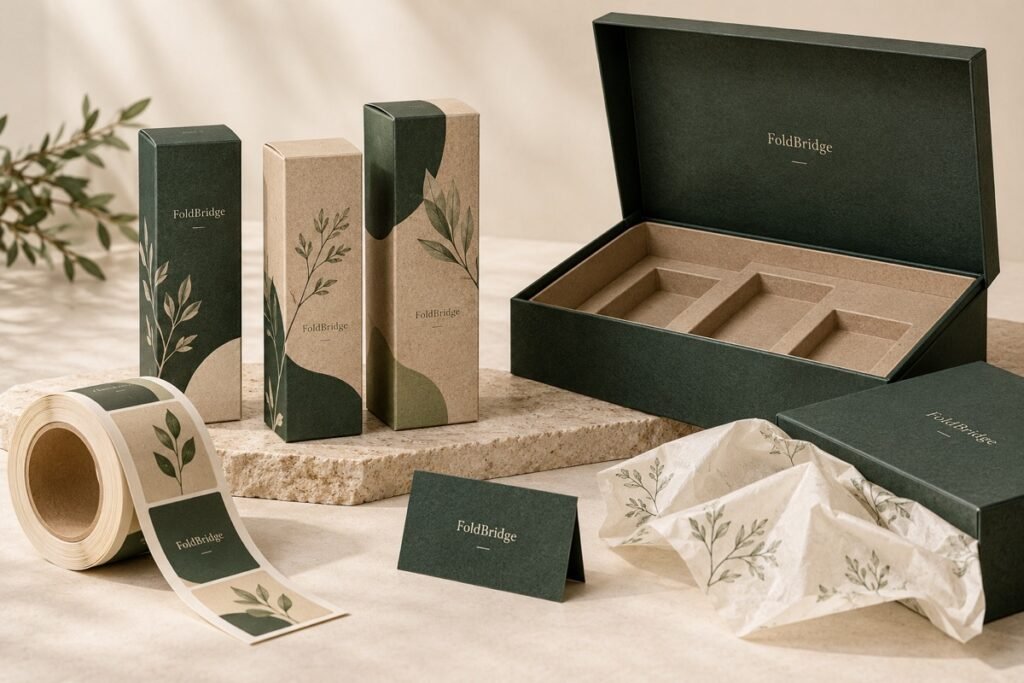
Use a visual reference to discuss the component family, opening experience and material direction. Approve dimensions, fit, artwork and the actual finish against a labeled physical sample.
Understand what each review can establish
Swipe across the table to compare all details.
| Review | Check | Do not assume |
|---|---|---|
| Artwork proof | SKU, text, layout, orientation and current file version. | That a screen view proves physical color, texture or fit. |
| Structural sample | Insertion, closure, positioning, assembly and removal. | That substitute materials or hand assembly represent the final production route. |
| Printed sample | Appearance and the specific processes represented by the sample. | That an unrepresented coating, foil or print process is already approved. |
| Production reference | The agreed material, construction and artwork revisions. | That all deviations have been resolved without recording them. |
| Shipping evaluation | The complete packed product under the agreed conditions. | That an empty box check covers a filled product or a changed distribution route. |
Review, record, then release the specific scope
Before reviewing a sample, identify what question it is intended to answer. Check its label against the current drawing and artwork. If those references disagree, stop the approval decision until the discrepancy is explained. A good-looking object with an unknown revision is a weak production reference.
Use representative products for fit and assembly checks. Follow the proposed packing sequence, inspect the contact points and try removing the contents. Record movement, obstruction or marking as specific observations. If a representative product is unavailable, state that limitation rather than recording an unconditional fit approval.
For visual review, identify the agreed material and physical color reference. Separate layout corrections from differences caused by a proposed material or process. Ask whether every finish on the sample represents the intended production method and list exceptions that still need review.
Use a clear decision: approved for a named scope, approved subject to stated conditions, or revise and resubmit. Name the reviewer, date and action owner. Keep the sample record with the specification. When a product, structure, material or artwork changes, identify which earlier checks need repeating.
Questions before you commit
Can I approve a sample by email?
An approval record can use the agreed communication process, but it should identify the sample and revisions, the scope approved and any conditions. A brief 'looks good' message can leave important production questions unresolved.
Do I need another sample after a small change?
It depends on what the change affects. A structural or material change may invalidate fit or appearance checks; an artwork change needs the relevant content and production review. Record the reason for repeating or retaining each approval.
Does sample approval remove the need for production checks?
No. Sample approval establishes a defined reference. Production checking is a separate activity with its own scope and responsibility. Agree how produced goods will be evaluated against the approved specification.
How should I label samples when several packaging revisions exist?
Give every sample a component name and revision reference, and keep its artwork and drawing identifiers in the approval record. Mark superseded samples clearly. The team should be able to distinguish the current production reference from earlier experiments without relying on memory.
Can I approve packaging color from a screen photograph?
A photograph is useful for discussing layout or an issue, but lighting, camera processing and screens change appearance. Agree the relevant physical reference and review conditions for color-sensitive decisions. Record where remote images are acceptable and where a physical sample is required.
What happens to open issues after a sample is approved?
An approval record should distinguish accepted decisions from unresolved or conditional points. Assign responsibility and identify which issues prevent release or require another check. Do not let a general approval message erase conditions that were attached to a particular material, component or revision.
Make the next decision with a clear brief
Share the product, quantity per SKU, destination and the questions still open. Specifications, costs and timing are confirmed after project review.