Custom E-commerce Packaging for DTC Brands
Custom e-commerce packaging has to work at the packing bench, in the delivery network and in the customer's hands. Plan the mailer, product support, wrapping and printed information as one configuration. A polished unboxing starts with a repeatable pack-out and an appropriate protection plan, not simply more printed surfaces.
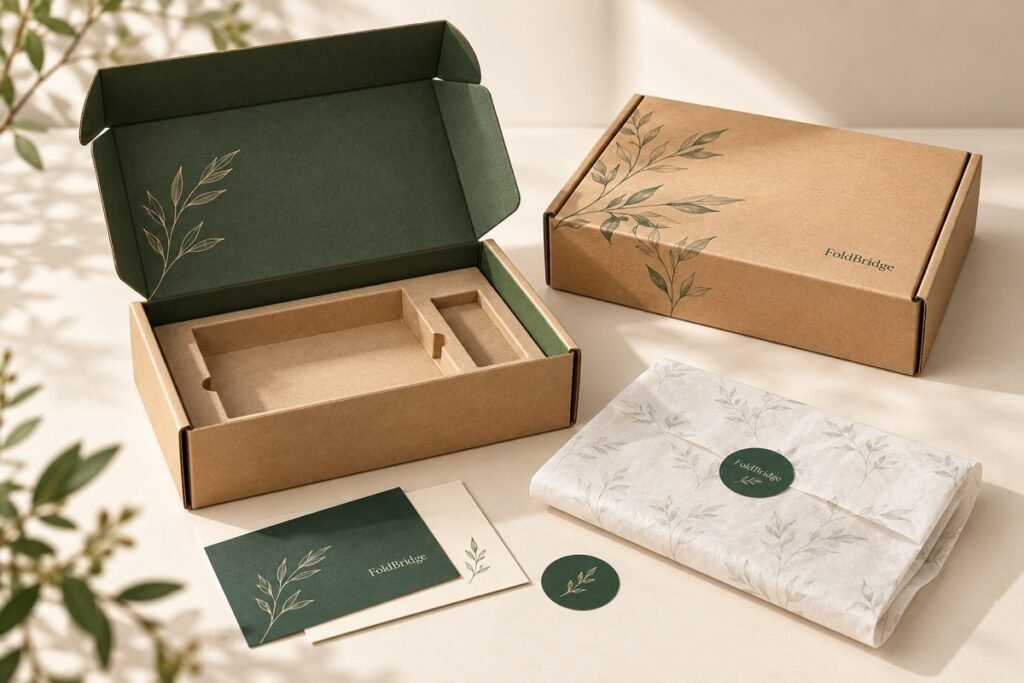
From packaging idea to a reviewable brief
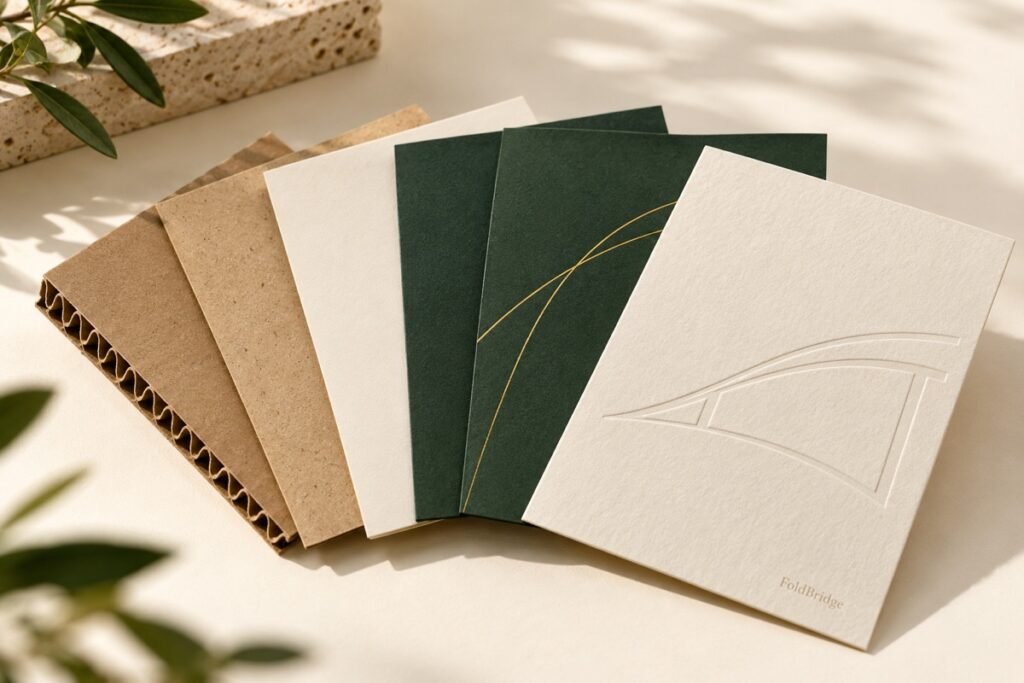
Use a visual reference to discuss the component family, opening experience and material direction. Approve dimensions, fit, artwork and the actual finish against a labeled physical sample.
Choose a configuration for the orders you actually ship
Swipe across the table to compare all details.
| Order type | Planning focus | What to evaluate |
|---|---|---|
| One repeat product | A consistent mailer size and packing sequence. | Usable space, movement, closure and where the shipping label will sit. |
| Mixed cart | Different combinations within a defined family of packaging sizes. | Avoid assuming the lightest, heaviest and least-filled orders behave alike. |
| Subscription or launch kit | A planned layout with version-controlled printed inserts. | Keep a record of which contents were approved in each packing configuration. |
| Gift purchase | Presentation inside a suitable shipping configuration. | Separate cosmetic appearance checks from the evaluation of delivery protection. |
Review the full cost of each packed order
Count components per shipment: mailer, retail carton, insert, wrapping, seal and card. Then record the actions required to assemble them. A packaging idea that looks simple on a rendering can introduce several extra handling steps. Use a trial pack-out to identify awkward folds, missing space or unclear instructions.
Separate product dimensions, usable internal packaging space and external shipping dimensions. Smaller is not automatically better if it creates pressure on a product or makes packing difficult. Ask for the shipping basis used in a quotation instead of comparing figures that cover different destinations or service levels.
For a return journey or frequently changing contents, describe those requirements before selecting the closure. Keep photographs and notes of the approved pack-out. When the product mix or material changes, decide which checks need repeating rather than assuming the earlier approval covers every future order.
Questions before you commit
Is an attractive mailer enough for fragile products?
Appearance and protection are separate decisions. Fragile products may need supports and an additional shipping layer. Review the filled configuration under agreed conditions before relying on it for delivery.
Should every order use the same box size?
A single size simplifies stock handling, but it may not suit all contents. Compare packing time, component use, usable space and shipment dimensions across the intended order mix. The best choice is the configuration that works for your actual fulfillment process.
How can I compare packaging options for different order sizes?
Group actual orders by product arrangement rather than by a single item’s dimensions. Compare the packed volume, inserts, wrapping and packing time for each group. Sample the representative orders and review whether a small set of packaging formats covers them reliably.
Should I approve e-commerce packaging before the fulfillment team reviews it?
Include the intended packing operation in the review. Check product insertion, wrap sequence, closure, label position and storage format with whoever will pack orders. Record their practical requirements alongside appearance and shipping evaluation before final approval.
Make the next decision with a clear brief
Share the product, quantity per SKU, destination and the questions still open. Specifications, costs and timing are confirmed after project review.